You know the look. You are reading the dress code handout for the third time, hunting for the line that says you cannot have the tiny gold dot you have been dreaming about since orientation.
Most hospital policies never actually ban nail art. They ban length, enhancements, chipped polish, and extreme colors.
Everything in the quiet space between those rules is yours to work with.
These 42 designs live in that space: real techniques like micro French twists, hairline line work, dot gradients, and negative space, all built on short nails with regular polish.
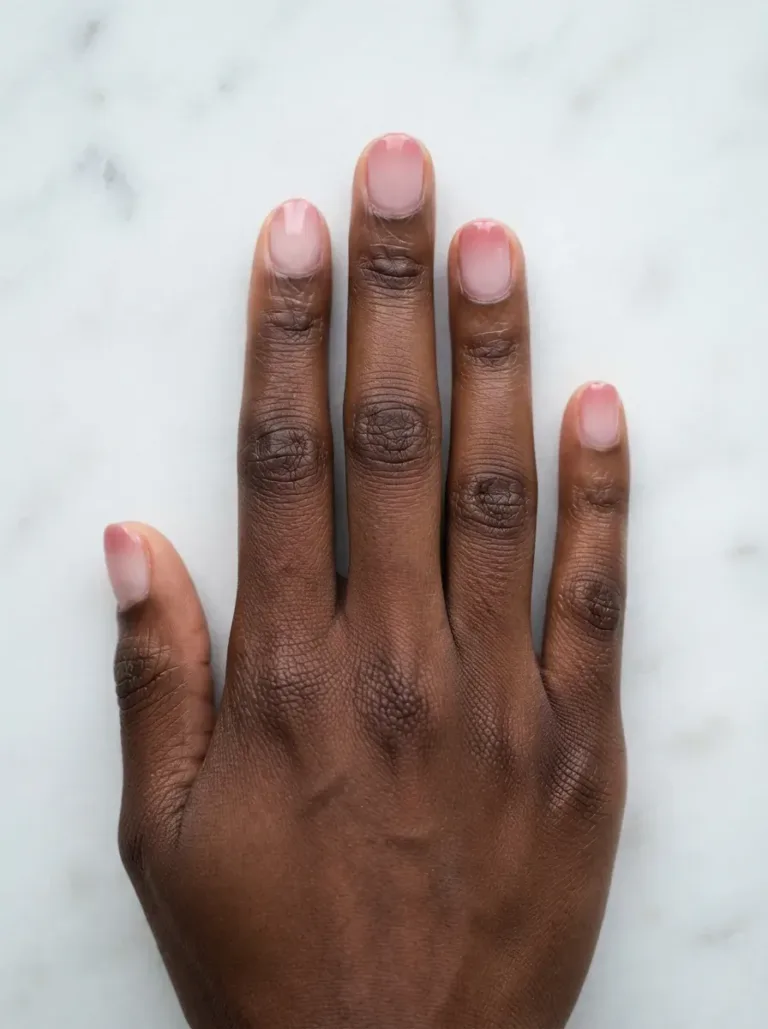
Start with the micro dot gradient below and keep scrolling until one feels like you.
Where the Line Actually Sits
Here is what most hospital nail policies prohibit, translated from HR language: nails longer than a quarter inch past the fingertip, acrylics, gels, dip powder, silk wraps, chipped or worn polish, and colors described as extreme. Notice what is missing from that list.
Almost no policy bans a dot, a hairline, a sheer wash, or a single accent nail, because policies are written against infection risk and unprofessional appearance, not against creativity at millimeter scale.
Run every design through three checks before you commit.
The glove test: put on a nitrile glove and pull it off twice; if the art survives, it will survive a shift.
The arm’s-length test: hold your hand at full extension; if the design reads as a neat neutral manicure, it passes.
The chipped-day-three test: imagine one nail loses a corner; does the design still look intentional? If all three answers are yes, paint it with confidence.
Save for later Cute Short Nails for Healthcare Workers: 46 Shift-Proof Ideas
Micro Dot Gradient Along the Cuticle

A row of tiny champagne dots runs from the cuticle and shrinks as it climbs, fading into a sheer milky nude base.
The gradient reads as texture rather than decoration, so most managers register it as a tidy nude manicure.
Chips hide well because the eye follows the fade instead of a hard edge. Works best if you keep the dots to three per nail, smaller than a pinhead.
Single Thin Gold Line Across Nude Nails

One hairline gold line crosses the middle of each nail over a soft nude beige base. It is the smallest dose of nail art, and at arm’s length it reads as a neutral manicure.
Sanitizer and gloves cause no trouble, since the line is sealed under top coat with the rest.
Works best if you paint the line with a striping brush, not a dotting tool, for an even hairline.
Negative Space Half-Moons in Sheer Pink

Half-moon shapes at the base stay bare while a sheer pink wash covers the rest of the nail. Because half of each nail is just healthy natural nail, the design scans as groomed rather than decorated.
Handwashing cannot dull bare nail, and regrowth blends in since the moon area is already your own nail.
Works best if you use a reinforcement sticker as a stencil for crisp, even moons.
Whisper-Thin French Tips in Matte White
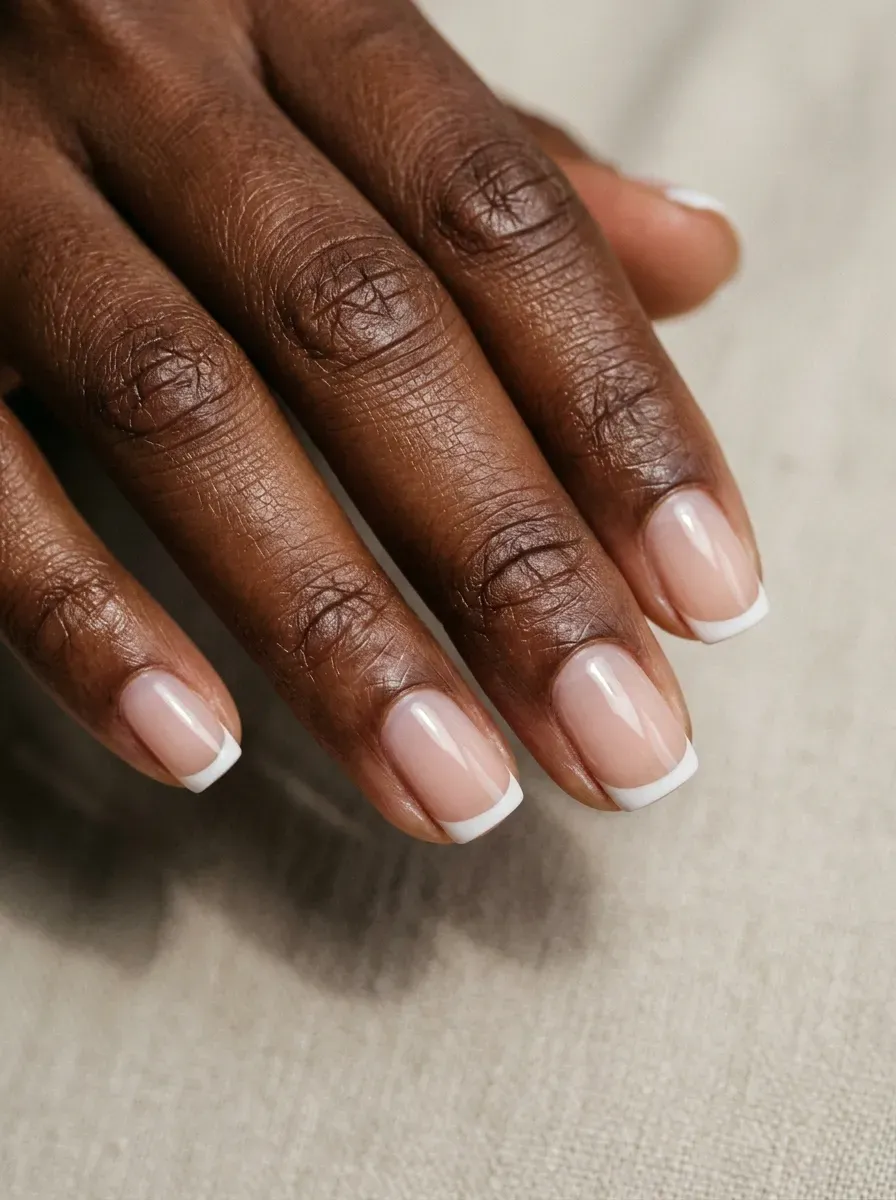
French tips shrunk to barely two millimeters read as a grooming detail, not a salon look.
The matte white finish keeps the line from catching the light, which matters under fluorescent ward lighting. Tip wear shows slowly because there is so little white to lose.
Works best if you seal the free edge with top coat twice, since tips meet gloves and sanitizer first.
Tiny Cream Dot Row on Sheer Beige

A single vertical row of cream dots runs down the center of each nail on a sheer beige base.
The repetition feels orderly and almost uniform-like, which is exactly why it survives dress-code scrutiny. Dots wear as well as the base polish since they are the same formula.
Works best if you space five dots evenly and let the smallest sit closest to the tip.
Check out Sweet-Spooky Halloween Nail Ideas in Pink and Black
Soft Ombré Fade From Blush to Bare
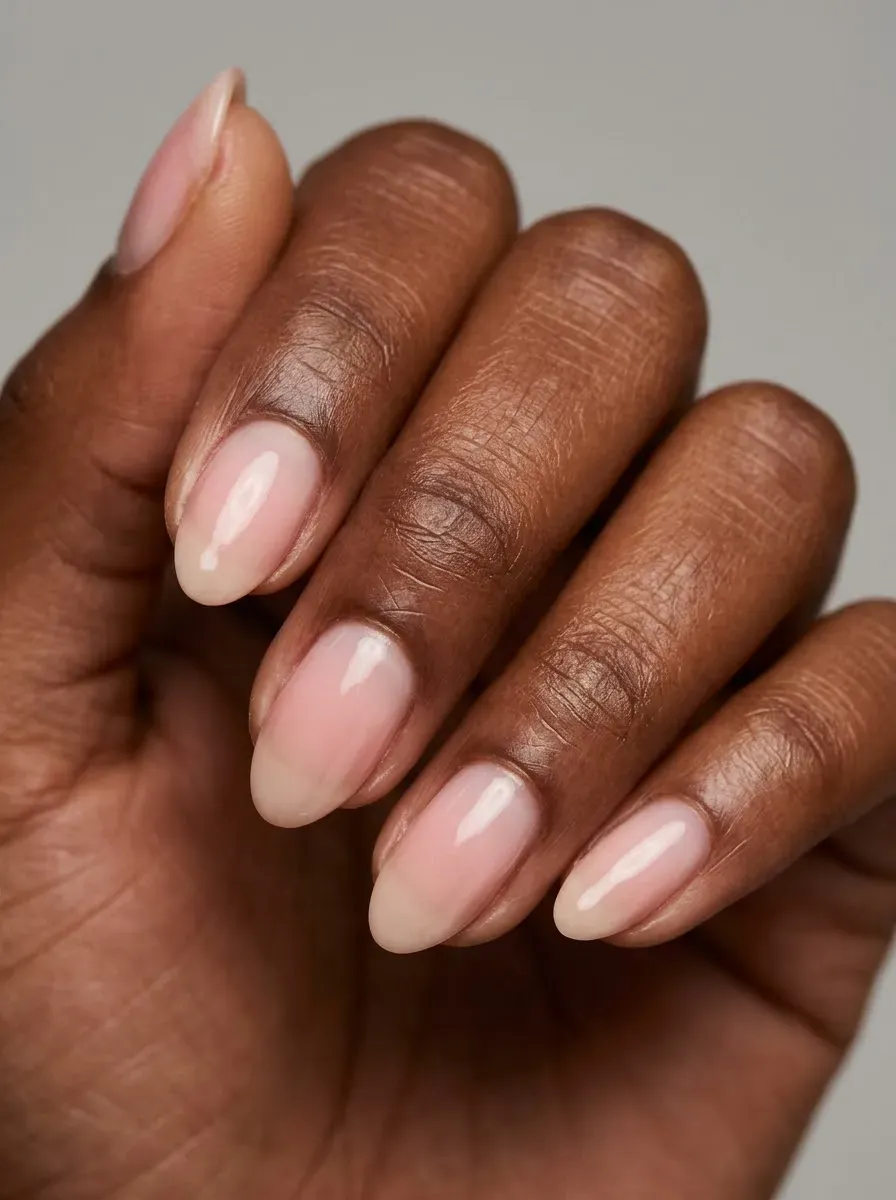
Blush pink melts into bare nail with no hard line anywhere. The gradient looks like a healthy glow rather than applied color, so it clears even strict policies quietly.
Chips are nearly invisible because there is no solid edge to flake from.
Works best if you sponge the fade with a makeup wedge and keep the tip fully bare for the most natural finish.
Single Accent Nail With a Fine Gold Arch
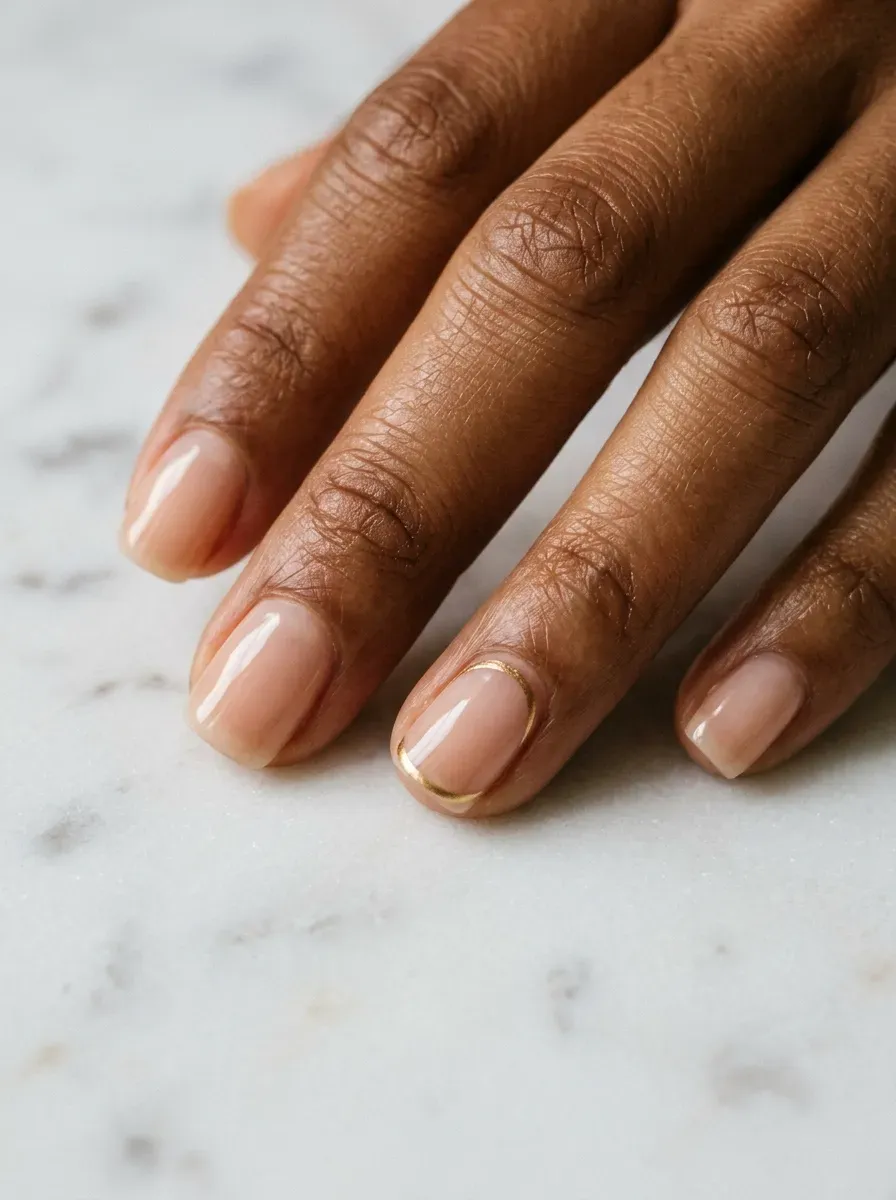
All ten nails wear sheer nude, and only the ring finger carries a fine gold arch near its tip.
One accent nail concentrates the art where policy usually stays silent, on a single finger. If a manager ever questions it, you are discussing one nail, not ten.
Works best if you place the accent on the ring finger of your non-dominant hand, where glove friction is lightest.
Hairline Black Tip Outlines

A black line no wider than a pencil stroke traces the free edge of each nude nail.
The outline defines the short shape cleanly, which actually reads as tidier than an undecorated nail. Black in this quantity cannot look harsh or gothic at arm’s length.
Works best if you draw the line after the base dries fully, so the brush glides without dragging.
Miniature White Daisy on One Nail
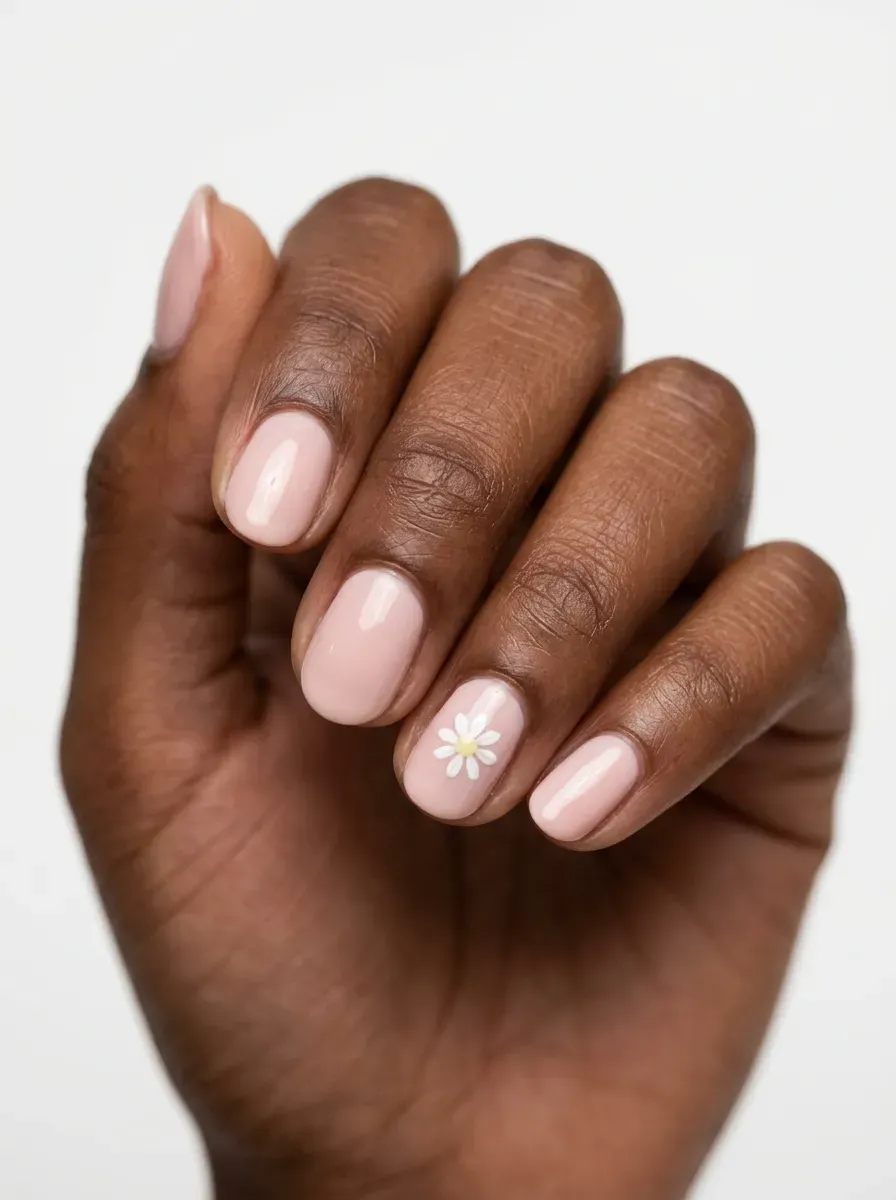
A single miniature daisy with a pale yellow center blooms on one blush nail.
The flower stays smaller than a pencil eraser, so it reads as a delicate detail rather than nail art with a capital A. Florals wear fine because the petals are sealed flat under top coat.
Works best if you paint the petals with a dotting tool, which keeps them round and even at tiny scale.
Barely-There Shimmer at the Cuticle

Champagne shimmer sits only along the cuticle line, catching light when you move your hands.
Placed low on the nail, it looks like healthy nail glow instead of glitter. The shimmer grains are sparse, so sanitizer wipes over them without dulling.
Works best if you apply it with a dry brush technique so the sparkle stays sparse and never reads as glitter polish.
Read more 36 Neutral Fall Nail Ideas for a Chic Autumn Look
Two-Tone Tips in Nude and Taupe

A thin soft taupe band sits over the nude tip of each nail for a quiet two-tone French. Both tones are office-neutral, so the contrast stays subtle even up close.
Taupe shows wear less than white because it matches the skin’s shadow tones.
Works best if you keep the band under three millimeters so the look stays delicate, not blocky.
Tiny Corner Triangles in Soft Gray

One tiny gray triangle tucks into the same lower corner of each beige nail. The repeated geometry feels intentional, precise, and almost architectural, yet the scale keeps it whisper-quiet.
Corners chip last on short nails, so this art placement outlasts tip designs.
Works best if you use striping tape to get the triangle edges sharp without a steady surgeon’s hand.
One Floating Gold Dot on Sheer Nude
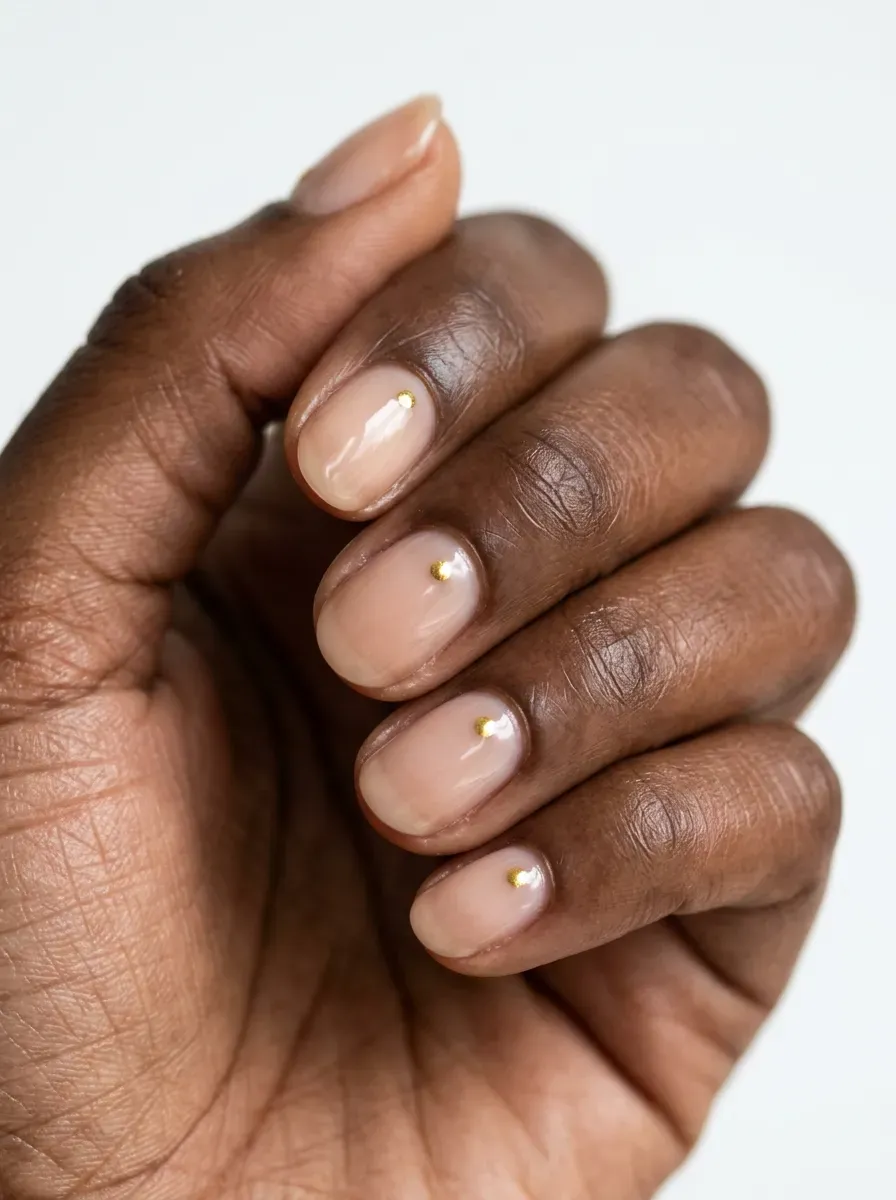
Each nail holds one gold dot floating just off-center on sheer nude. The negative space around it does the heavy lifting, making the art feel airy and modern.
A lone dot is the easiest art to touch up midweek with zero blending skill.
Works best if you place every dot at the same height so the set looks deliberate rather than random.
Micro French in Greige Instead of White
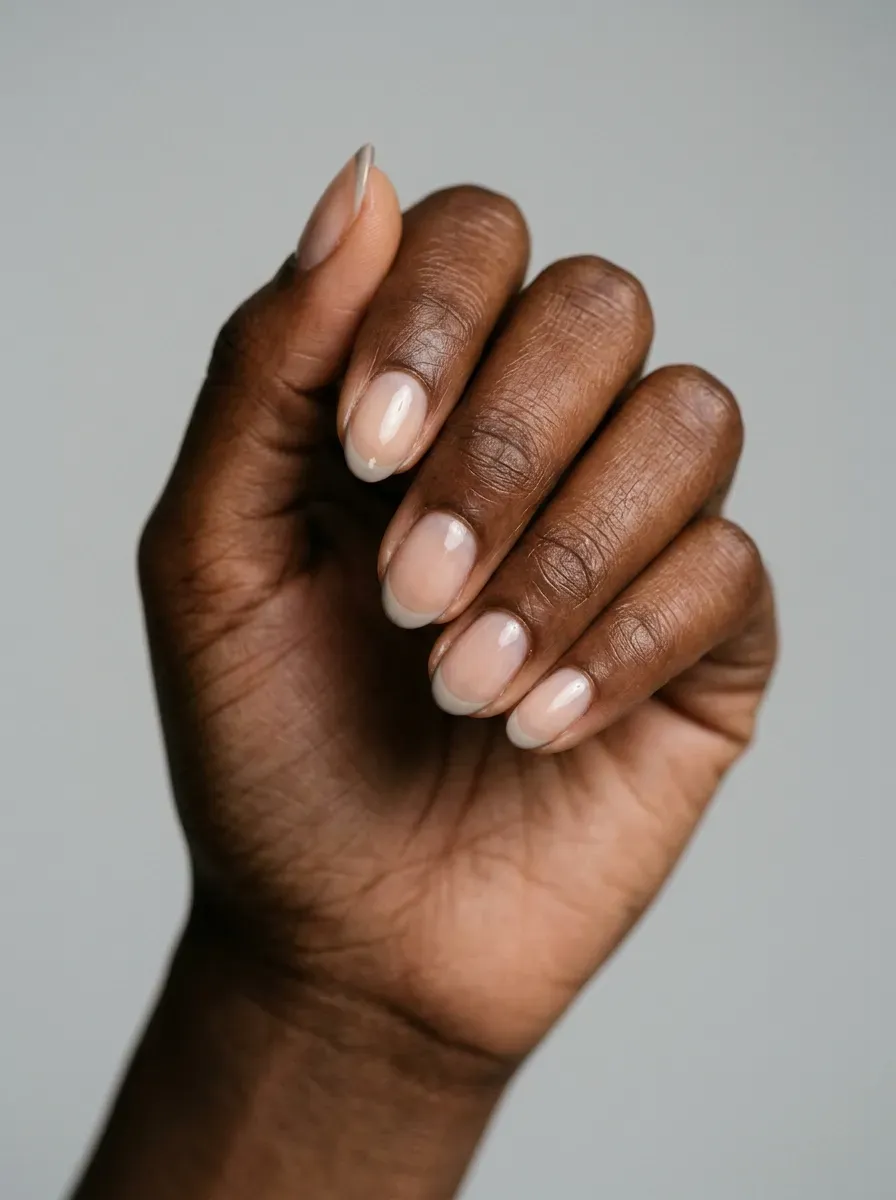
Swapping white for greige turns the classic French into something far softer. The tip line blends with most skin undertones, which makes regrowth nearly invisible.
It feels modern without trying too hard. Greige also resists the yellowing that white tips pick up from sanitizer.
Works best if you choose a greige one shade deeper than your nude base for gentle definition.
Negative Space Diagonal Split
See: 20 Thoughtful Christmas Gifts for Mom (That Don’t Look Last-Minute)
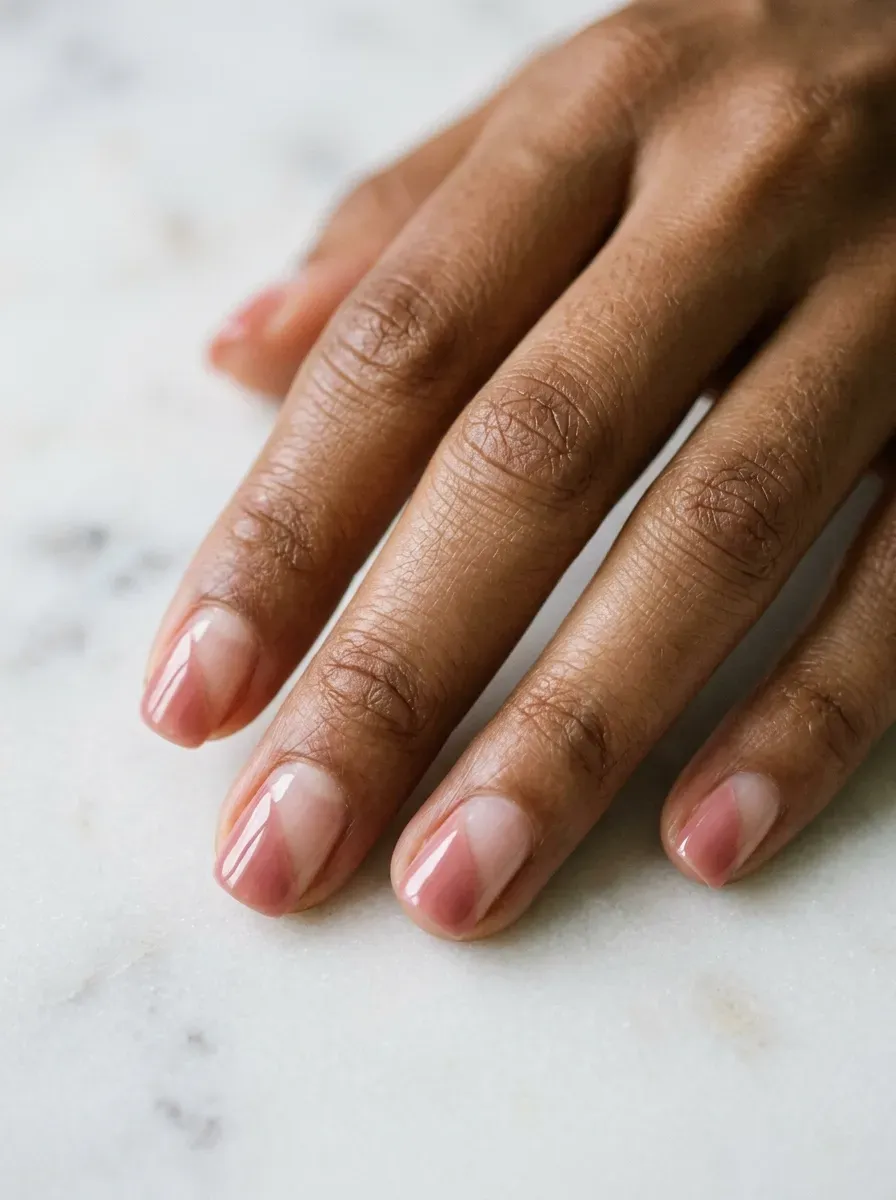
A clean diagonal line divides each nail into sheer rose and bare natural nail. The bare half keeps the design honest and policy-friendly, while the diagonal adds crisp, genuine graphic interest.
Regrowth disappears into the bare half within days. Sanitizer cannot dull what is not painted.
Works best if you angle every split the same direction across all ten nails for a cohesive, uniform set.
Soft Pink Tonal Stripe Down the Center

A soft pink stripe runs down the center of each nude nail in a tone barely deeper than the base.
Tonal art like this reads as shading, not decoration, under harsh overhead lights.
Stripes grow out gracefully because they never touch the cuticle. Works best if you keep the stripe width to about a third of the nail for balance.
Cuticle Crescent in Sheer Silver Shimmer

A thin crescent of silver shimmer hugs each cuticle over sheer beige.
The placement mirrors the natural lighter half-moon of the nail, so it looks like an enhancement of what is already there. Shimmer at the base avoids tip friction from gloves entirely.
Works best if you press the shimmer into tacky base coat rather than painting it, which keeps the crescent thin and even.
Tiny Crossed Lines on a Nude Base
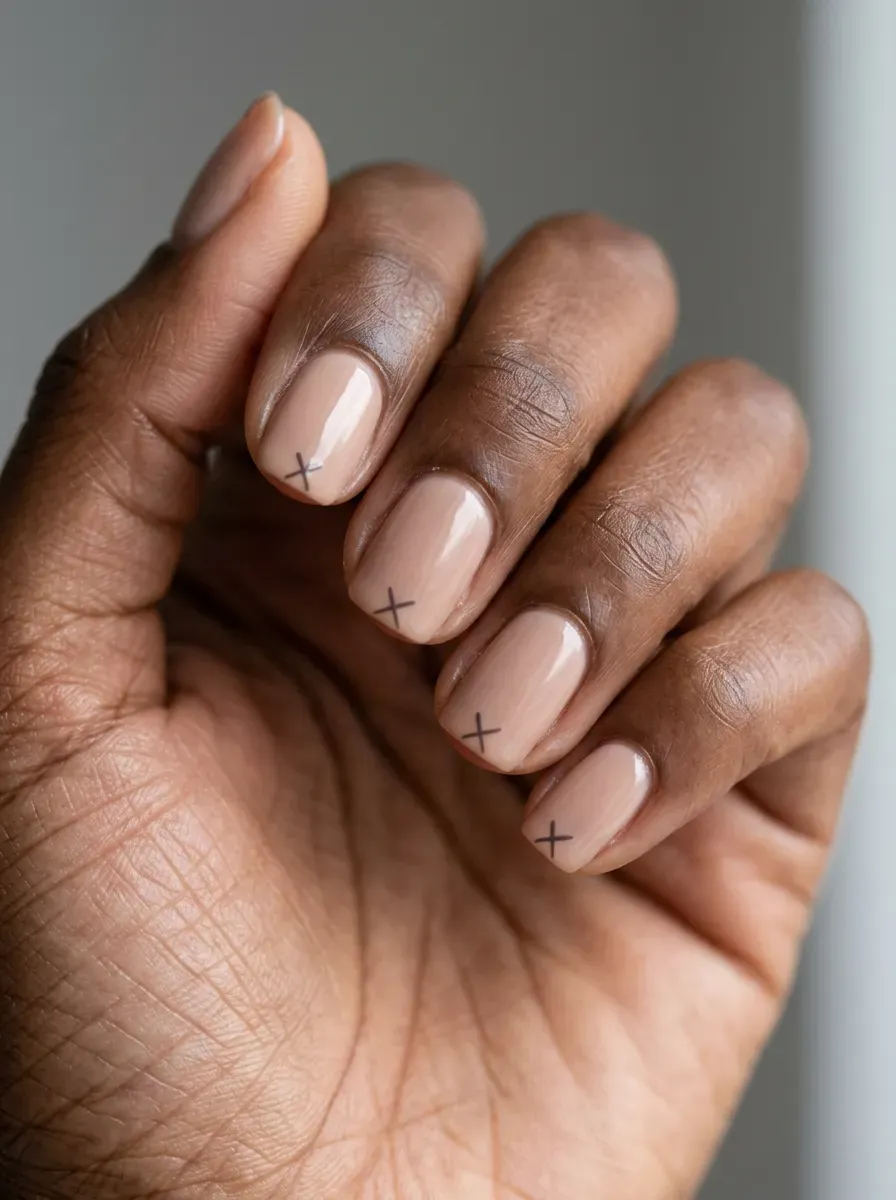
Two short strokes cross into a tiny X near the tip of each nude nail. The mark is smaller than a freckle but gives the eye something to land on.
Crossed lines take seconds to paint, which matters when you redo nails between shift blocks.
Works best if you angle each X identically so the set looks like a pattern, not a mistake.
Sheer Overlay With a Single White Dot Per Nail

A white dot on each nail gets sealed under a sheer nude overlay, which mutes it to a soft glow. The layered technique looks expensive and intentional while staying firmly neutral.
Overlaying protects the dot from sanitizer abrasion better than any top coat alone.
Works best if you let the dot dry completely before the sheer coat, or the white will drag.
Read now 2026 Nail Inspo You Need to Save Now
Micro Side-Swept French Line

The French line sweeps diagonally to one side instead of crossing straight. This small twist makes a familiar manicure feel designed without adding any color risk.
Its asymmetry also draws attention away from uneven tip wear. Short nails benefit most, since the angle creates the illusion of extra length.
Works best if you sweep every line toward the thumb side for a consistent, deliberate rhythm.
Small Dot Cluster Like a Constellation

Small tiny dots cluster like constellations on two accent nails while the rest stay plain nude.
Limiting the art to two nails keeps the overall impression truly conservative with a private creative payoff. Clusters hide chips because the eye reads the grouping, not individual dots.
Works best if you vary dot sizes within each cluster for a natural starry effect.
Thin Taupe Arch Tracing the Tip

A thin taupe arch traces each tip like an outlined French, leaving the center of the tip bare.
The open center makes nails look longer without adding length, and taupe stays neutral under any lighting. Arches follow the nail’s natural curve, so regrowth looks seamless.
Works best if you paint the arch with the brush almost flat for a line that stays uniform.
Bare Nude With a Single Matte Dot
See: Cute Short Nails for Healthcare Workers: 46 Shift-Proof Ideas

One matte dot sits on each glossy nude nail, playing finish against finish instead of color against color.
The contrast only appears when light hits, so it stays discreet in a patient room. Matte dots grip the surface well and rarely peel before the base does.
Works best if you use a matte top coat just on the dot for the cleanest finish contrast.
Micro Checkerboard in Tone-on-Tone Beige

A checkerboard in two barely different beiges gives you real pattern at near-invisible contrast.
Tone-on-tone art is the dress-code sweet spot: technically nail art, visually a neutral manicure. The grid also disguises tip wear because the eye cannot find a clean edge.
Works best if you keep the squares very tiny, about four across the nail, for the subtlest effect.
See more The French Manicure Reboot Every Fall Nail Lover Needs
Pale Gold Foil Specks Near the Cuticle

Tiny gold foil specks scatter near each cuticle over sheer rose.
Foil catches light in a way polish cannot, giving genuine luxury at a scale no policy would flag. Specks near the base avoid all glove friction and grow out gracefully.
Works best if you press the foil into half-dry top coat so it embeds flat and never snags on gloves.
Half-Moon Tip Fade in Soft Rose

Soft rose gently deepens only at the very tip, fading softly back to nude like a reversed gradient.
The color lives where nails are strongest and regrowth is slowest to show. Rose reads warm and healthy rather than merely decorative.
Works best if you blend with a sponge in thin layers, building the color slowly so the fade stays seamless.
Fine White Line Tracing the Nail Edge
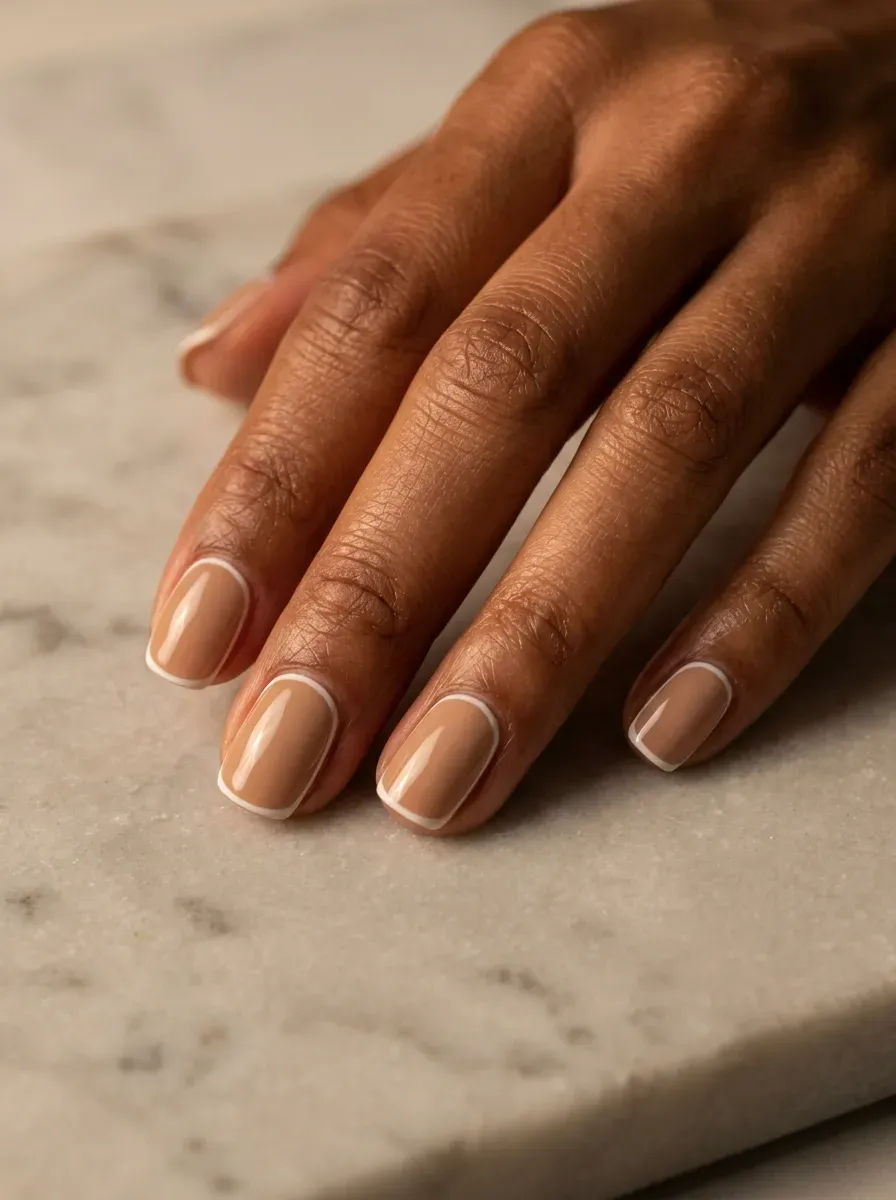
A fine white line traces the entire edge of each beige nail like a frame.
The outline makes short nails look sculpted and deliberate, which reads as professional polish. Edge lines sit away from the high-friction tip center, so they outlast tip art.
Works best if you steady your painting hand against the table edge for one smooth continuous line.
Tonal Greige Gradient Tips

Greige deepens gradually toward each tip with no harsh line marking where nude ends. The tonal shift adds dimension that flat polish cannot, while staying fully inside a neutral palette.
Gradients camouflage the white stress marks that short nails get from glove removal.
Works best if you apply two thin gradient passes rather than a single heavy one for smoothness.
Check out 30 Day of the Dead Nail Art Ideas for Halloween
Tiny Vertical Dash Trio on Sheer Base

Three tiny vertical dashes group near the center of each sheer nude nail. The minimal marks feel like punctuation, neat and almost typographic.
Center placement keeps the art far from both cuticle regrowth and tip wear. Nothing about the design competes with a professional uniform.
Works best if you keep the dashes the same length, about two millimeters, for a tidy uniform look.
One Micro Heart in Soft Pink
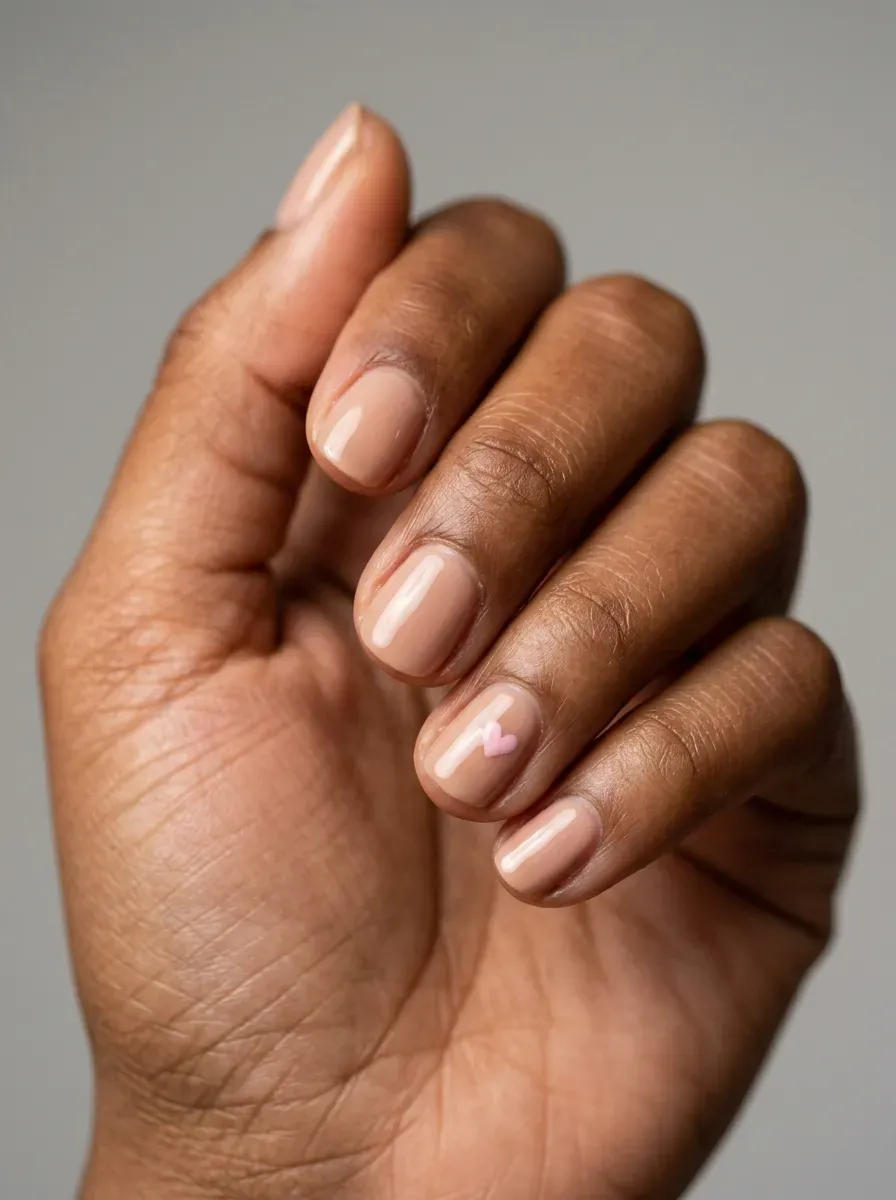
One micro heart in soft pink sits on a single nude accent nail. At four millimeters wide it is a private detail, not a statement, and pink keeps it gentle.
A lone heart is also the fastest art to remove if a policy ever tightens.
Works best if you form the heart with two small dots and a tiny triangle, which beats freehand drawing.
Negative Space Ring Around Each Nail
See: Sweet-Spooky Halloween Nail Ideas in Pink and Black

A delicate thin nude ring follows each nail’s edges while the center stays completely bare.
The floating frame still looks modern and artistic, yet most of the nail is untouched natural nail. Bare centers mean sanitizer and handwashing affect almost nothing.
Works best if you paint the ring with a detail brush in one pass, since touch-ups thicken the line.
Milky Wash With a Faint White Moon

A soft faint white half-moon sits at each base under a milky translucent wash. The layered sheers create depth that reads as genuinely healthy nail, not decoration.
Moons at the base never meet glove friction, so they stay crisp for the full wear.
Works best if you keep the wash to two thin coats, since thicker layers cloud the moon.
Micro Dot French Tips

The French tip becomes a row of tiny white dots instead of a solid line.
Dotted edges look softer and more current than painted lines, and gaps between dots forgive uneven application. Dots also chip less noticeably than a continuous white band.
Works best if you size the dots to shrink slightly toward the corners for a natural curved illusion.
Thin Diagonal Line in Deep Taupe
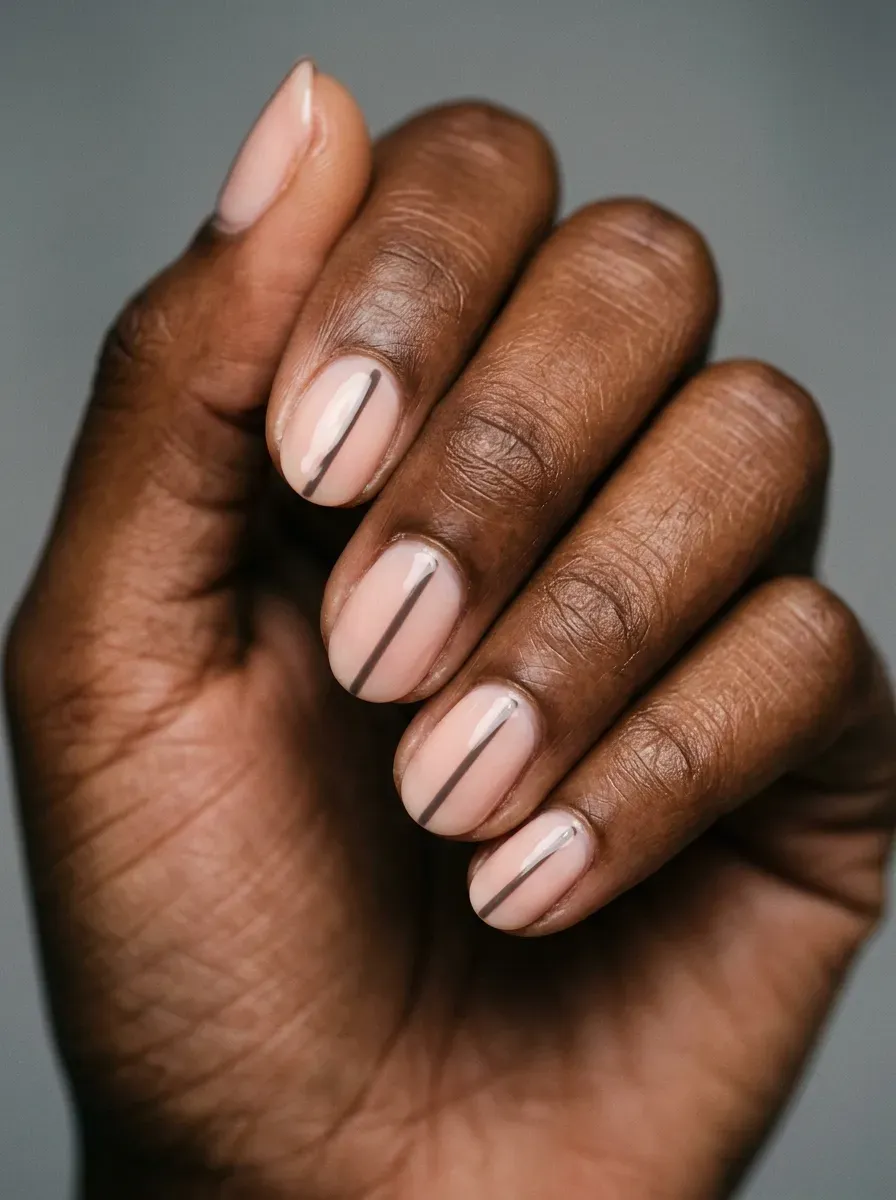
One fine deep taupe line cuts diagonally across each soft blush nail. The single stroke adds quiet graphic confidence while the palette stays truly calm and clinical-safe.
Diagonal art draws the eye along the nail, which flatters short lengths most.
Works best if you draw the line from cuticle corner to opposite tip corner for the longest, most elegant slash.
Single Ivory Petal Stroke
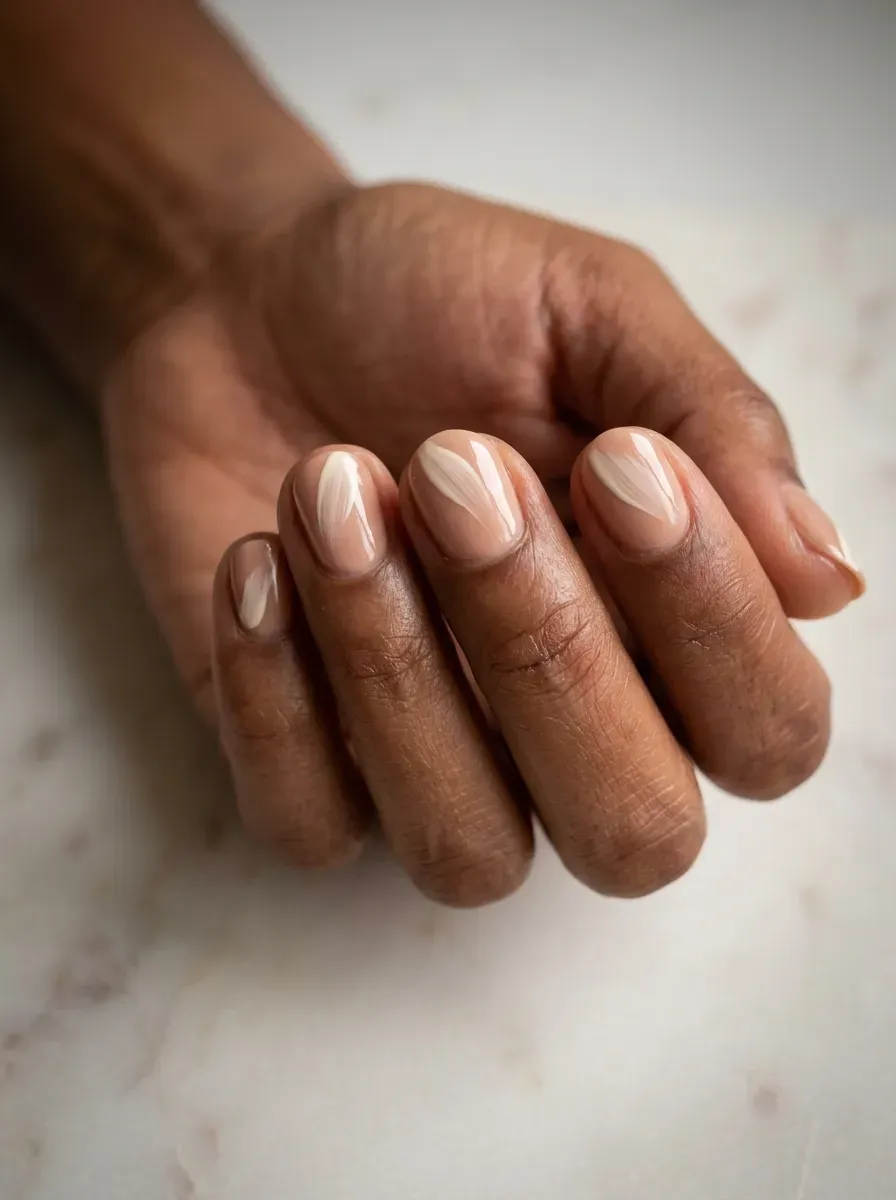
A delicate single ivory brush stroke sweeps softly across each nail like one petal caught mid-motion.
One-stroke art is the definition of minimal effort with visible payoff, and ivory stays neutral. The stroke’s soft edge hides wear far better than outlined shapes.
Works best if you load the brush lightly and pull in one motion, since re-stroking muddies the petal.
Sheer Nude With Scattered Micro Gold Flecks

Micro gold flecks dust across sheer nude nails like scattered light. The randomness is the point: no pattern means no precision required and no visible mistakes.
Flecks sealed under top coat survive sanitizer completely untouched. It reads as candlelight caught on the nails.
Works best if you apply the flecks with a fan brush, which distributes them more naturally than fingers.
Continue reading 30 Day of the Dead Nail Art Ideas for Halloween
Barely-Visible Herringbone in Tonal Beige
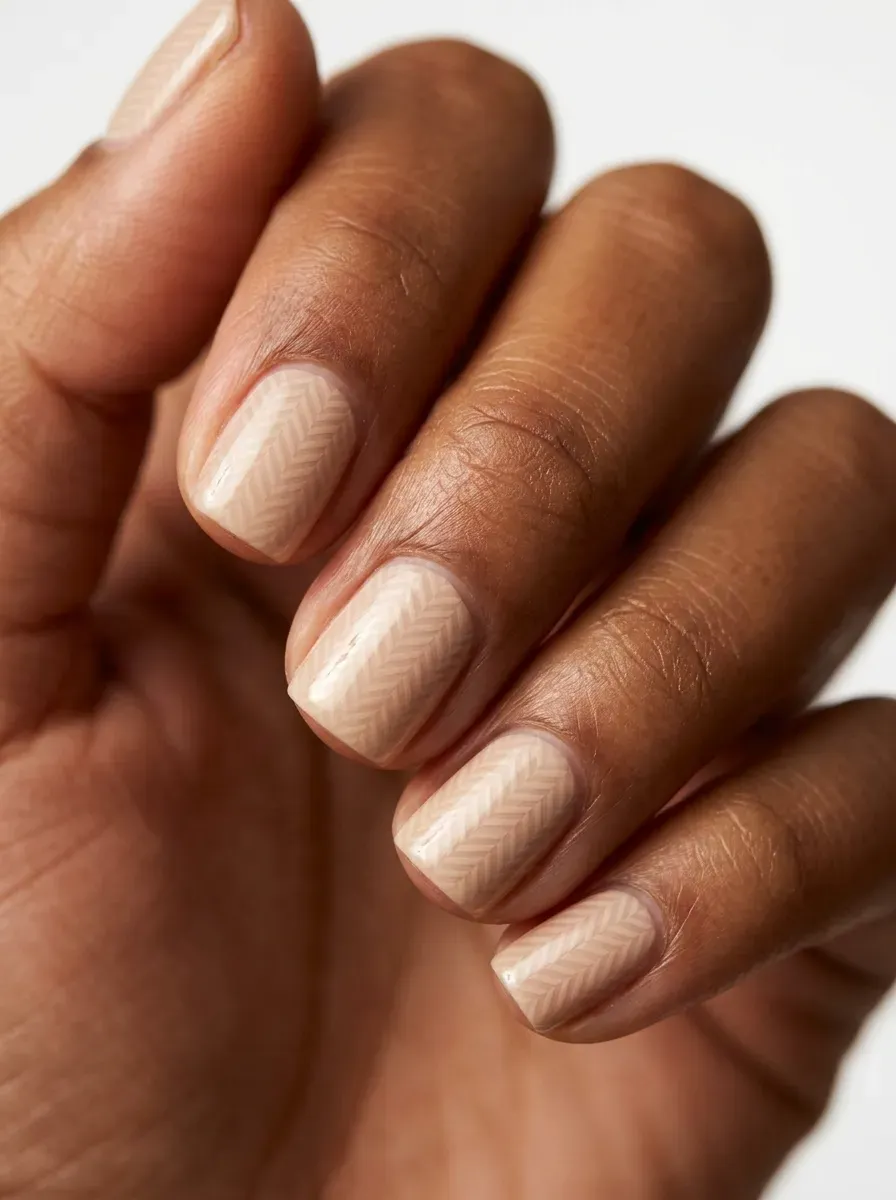
Herringbone woven in two barely different beiges gives you soft, genuine textile-like pattern at whisper volume.
The interlocking Vs look intricate up close but dissolve completely into neutral at arm’s length. Patterned surfaces hide small chips far better than any flat color.
Works best if you use striping tape for the Vs, since freehand herringbone at this scale is unforgiving.
Tiny Starburst Dot on the Ring Finger

A small tiny gold starburst with short fine radiating lines marks only the ring finger. One celebratory detail among nine quiet nails keeps the set calm and professional with personality.
It catches light beautifully during hand movements. Starbursts read as jewelry-like, which suits the metallic finish.
Works best if you keep the radiating lines to six or fewer so the star stays delicate, not spiky.
Frosted Tip Wash With a Faint Edge Line

A frosted white wash fades over each tip, finished with a faint white edge line.
The frosted effect softens the tip so wear shows as gentle fading rather than harsh chipping. This finish looks especially neat under the bright lights of an exam room.
Works best if you use a white jelly polish for the wash, since regular white goes opaque too fast.
Micro Double French in Two Neutrals

Two parallel micro lines, one white and one taupe, trace each tip. The double line doubles the design interest while both colors stay firmly neutral.
Twin lines also reinforce each other visually, so minor wear on one goes unnoticed.
Works best if you paint the soft taupe line first and the white closer to the edge for a layered effect.
Small Leaf Sprig on One Accent Nail

A small minimalist leaf sprig in muted sage grows gently up one beige accent nail.
Botanical art feels calm and organic, and sage is a neutral that never raises eyebrows. Single-stem designs are forgiving to paint with a detail brush.
Works best if you keep the sprig to three tiny leaves, since more starts to look busy at this scale.
Pale Shimmer Gradient From Tip to Base
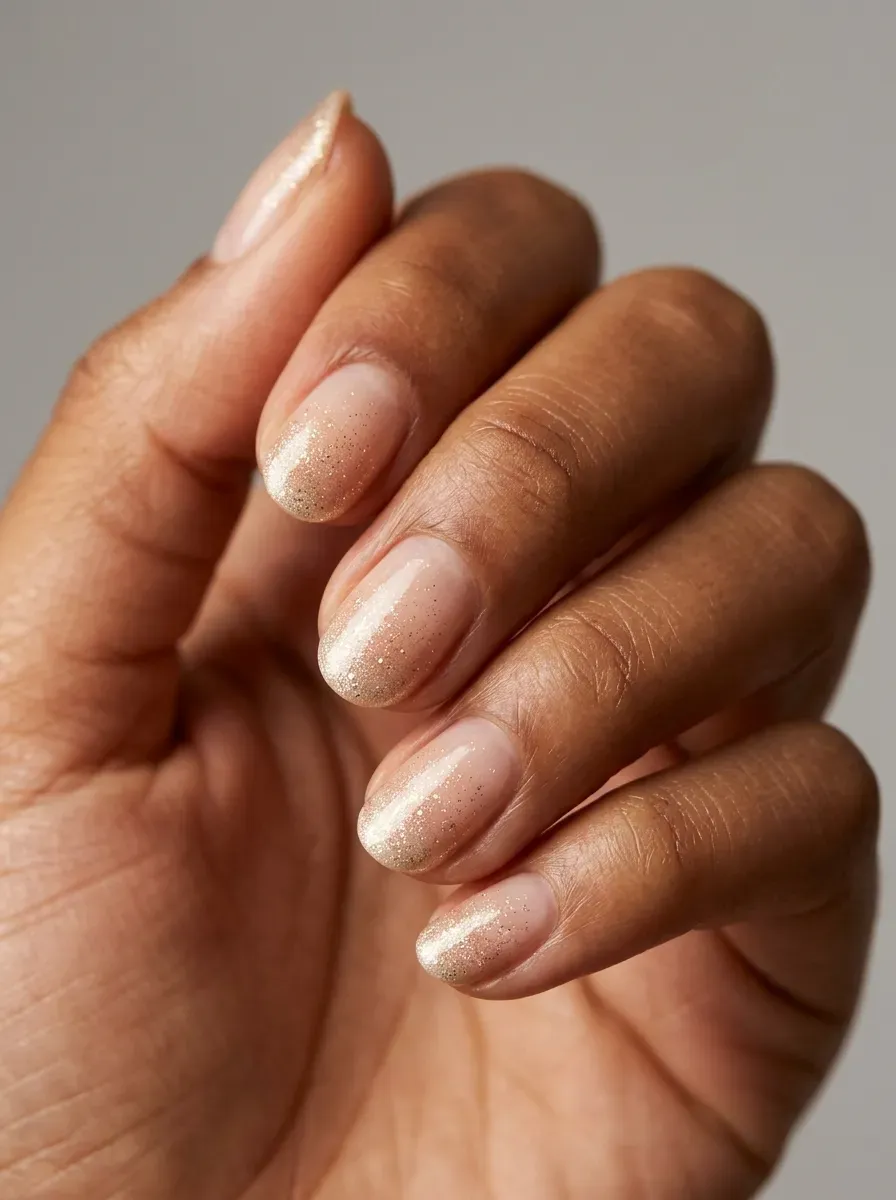
Soft champagne shimmer gathers at the tip and dissolves toward the base over sheer nude. The gradient gives light-catching dimension without any glitter-polish glare.
Tip-concentrated shimmer actually reinforces the free edge against wear. It looks like morning light moving across the nails.
Works best if you sponge the shimmer on in layers, densest at the tip, for the smoothest fade.
Read also Creepy Halloween Nails Inspired by Horror Movies
How to Check a Borderline Design With Your Manager Before You Commit
Bring the question before the polish, not after. The easiest approach is a photo on your phone: show your charge nurse or manager the exact design and ask whether it fits the unit’s interpretation of the policy.
Framing matters, so describe it in policy language. Say short, regular polish, neutral tones, no enhancements, and let the image do the rest.
Most managers respond to specifics far better than to abstract questions about nail art.
Timing helps too. Ask during a calm moment, never during a code or a staffing crunch, and accept the answer gracefully either way.
If the answer is no, ask what specifically concerns them, because length or color feedback tells you how to adjust the next design.
Keep a small rotation of designs you have already cleared, so a borderline idea is never your only option on a work morning.
A five-minute conversation now saves a full removal and repaint later.
The Single-Accent-Nail Strategy: Maximum Self-Expression With Minimum Policy Risk
The single accent nail is the most policy-efficient design in nail art. Nine nails wear a plain compliant base while one carries the dot, the arch, the tiny floral, or the shimmer detail you actually wanted.
Visually, the set still reads as a professional manicure from any distance that matters.
Administratively, you are discussing one nail if anyone ever asks, which is a much easier conversation than defending ten.
Placement is part of the strategy. Choose the ring finger of your non-dominant hand, which takes the least glove friction and the least direct contact during patient care, so the art lasts longest there.
Some nurses rotate the accent finger weekly, which keeps any single nail from becoming a signature anyone monitors.
Psychologically, one deliberate detail can carry your whole creative impulse through a twelve-hour shift without a second thought about compliance.
Keep the base shade consistent across all ten nails so the accent reads as intentional rather than accidental.
Why Subtle Art Shows Chips Less Than Solid Dark Polish
Here is the counterintuitive truth about wear: a solid dark polish advertises every flaw, while subtle art hides them.
A chip in oxblood or black creates a high-contrast bald spot that catches the eye from across the room.
In a dot gradient, a tonal stripe, or scattered flecks, a chip barely registers, because the design has no solid field for the damage to interrupt.
The eye needs a uniform background to notice what is missing.
Sheer and negative-space designs take this further. When half the nail is bare natural nail, there is simply less polish to lose, and regrowth blends into the design instead of announcing itself.
This is why the art in this collection is not just prettier than a flat neutral; it is functionally lower maintenance.
Hand sanitizer dulls solid darks into a cloudy finish, while sheers and art simply keep looking clean.
You get more days of presentable wear between manicures, which matters when your schedule leaves one free evening a week.
Holiday Micro-Art That Reads Professional at Arm’s Length
Seasonal nail art does not have to mean a full Halloween set. A single black micro dot on an orange-free nude base nods to October without a pumpkin in sight.
For December, one champagne shimmer crescent at the cuticle reads festive under holiday lighting and neutral under fluorescents. Spring can be a single sage leaf sprig on one accent nail.
The principle is always the same: one tiny seasonal gesture, surrounded by calm neutrals.
Distance is your design tool. Whatever you paint should dissolve into a tidy neutral manicure at arm’s length and reveal its seasonal secret only up close.
Avoid literal icons, which invite interpretation and questions; abstract hints like a deep plum dot or a gold fleck carry the mood without the message.
Paint holiday micro-art on a Thursday so it peaks for the weekend and you can remove or mute it before the next workweek if your unit runs strict.
Narrow it down by your reality. If your facility is strict, stay with the dot gradients, hairline lines, and negative-space designs that read as grooming.
If your manager is relaxed, try the accent nails and tonal patterns. Low maintenance tolerance points to center-placed art and sheers; if you repaint weekly, the tip details and foils are fair game.
Night shift workers can lean slightly bolder since fewer administrators are watching. Pick one design, run the three checks, and wear it to your next shift.